
CONVERSATION STARTER
Updated: Jan 21
There came a moment when I realized that love had to have a common correlation.
It couldn’t exist only in words.
And it couldn’t survive on effort without truth.
If love was real, it had to be shown when it was spoken.
There had to be a collective alignment of actions, behaviors, and consistency that supported the claim.
Anything outside of that was not love.
It was performance disguised as intention.
And if you don’t pay close attention — if you don’t widen your perspective — you can be easily fooled into believing that trauma is love.
Especially when you are conditioned to endure.
Especially when you have learned to equate survival with strength.
My body knew this long before my mind was willing to admit it.
It didn’t feel right from the beginning.
But humans are adaptive by nature.
And somewhere along the way, we started believing that adapting meant conquering — even when adaptation did not make us better.
That belief is dangerous.
I adapted to toxicity like it was normal.
Like it was necessary.
Like learning how to function inside dysfunction meant I was resilient.
I was wrong.
My body aged aggressively under the weight of false love and constant stress.
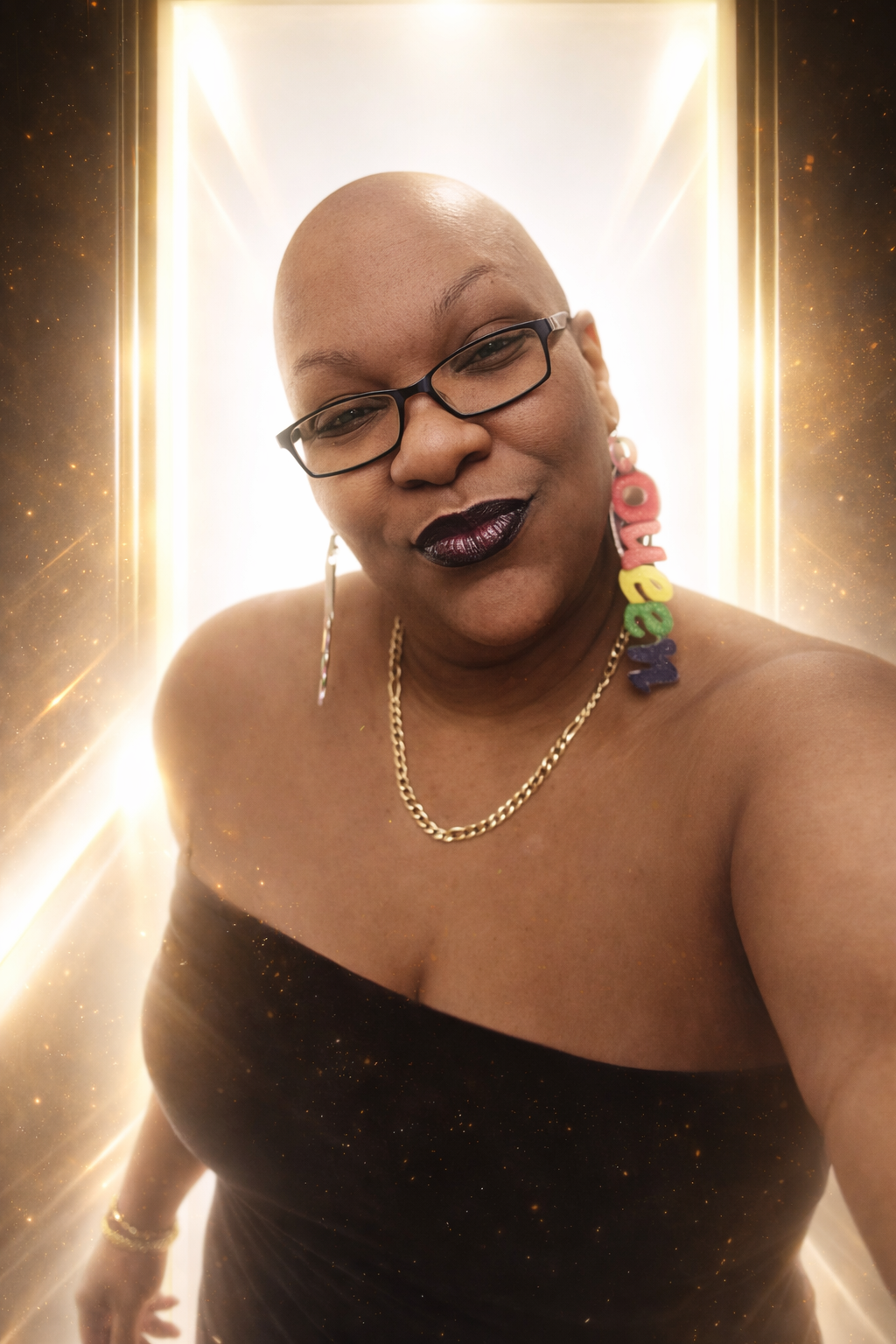
I lost hair.
I lost weight.
I lost self-confidence.
I lost clarity.
I lost sight of myself while trying to maintain connection with something that was quietly consuming me.
Every system in my body was responding.
My senses were overloaded.
My nervous system stayed on alert.
My intuition was sending warnings that I kept rationalizing away.
I learned how to operate in environments that were harmful and call it maturity.
I learned how to tolerate emotional instability and label it commitment.
I learned how to override my own perception and tell myself it was love.
That is what happens when you do not know how to listen to your senses.
Because adapting to toxicity is not strength.
It is slow harm.
It affects the immune system.
It disrupts hormonal balance.
It accelerates aging.
It clouds judgment.
It disconnects you from your internal awareness.
And it is one of the most overlooked killers in plain sight — hidden behind loyalty, endurance, obligation, and silence.
My body was never confused.
It was communicating.
The tightness.
The exhaustion.
The restlessness.
The way peace felt unfamiliar.
The way calm felt suspicious.
My soul was processing what my mind was trying to negotiate.
And my spirit was registering what I kept explaining away.
I simply did not yet understand the language.
This is where my relationship with sensing changed.
I stopped asking why something didn’t feel right and started paying attention to how my body responded before I spoke.
I stopped prioritizing what sounded good and began honoring what was consistent.
I stopped adapting and started discerning.
That is when I understood that sensing is not weakness.
It is intelligence.
Your body perceives before your mind concludes.
Your soul recognizes patterns before your logic organizes them.
Your spirit discerns truth before you find the words.
When you learn how to sense — truly sense — you stop mislabeling harm as love.
You stop calling survival success.
You stop betraying yourself for the sake of endurance.
This is not theory.
This is lived experience.
This is why the senses matter — not as biology alone, but as information systems designed to keep you aligned, aware, and alive.
This is where the conversation begins.


Comments